
Opeoluwa Osho
I build AI systems that run businesses, not demos. 7+ years of production backend experience across Go, Python, and TypeScript — now shipping agentic AI end to end and keeping it correct under load, retries, and partial failure.
Projects
Production AI systems — architecture, backend, and the reliability engineering that keeps them running.
Nova — AI Advertising Automation Platform
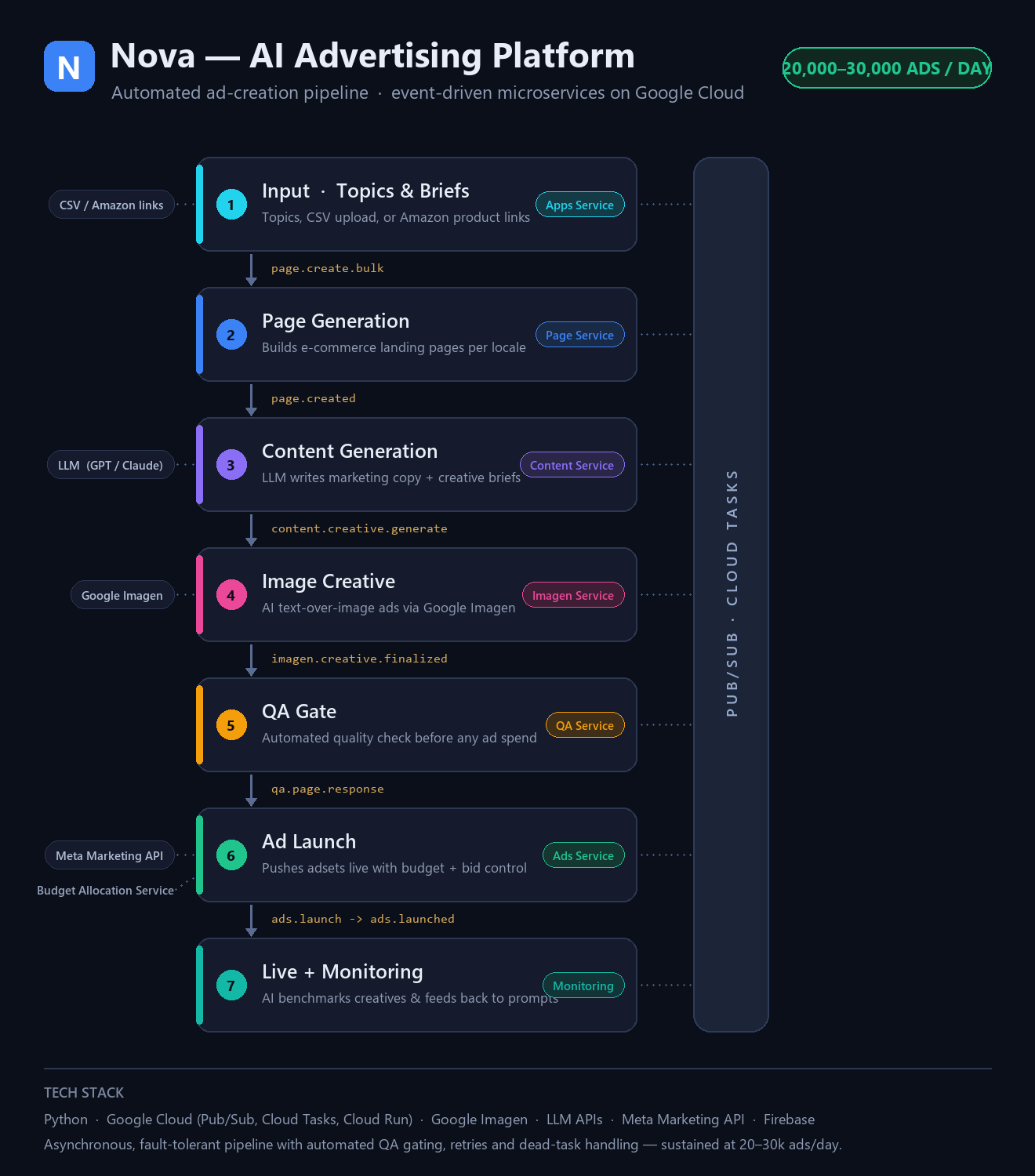
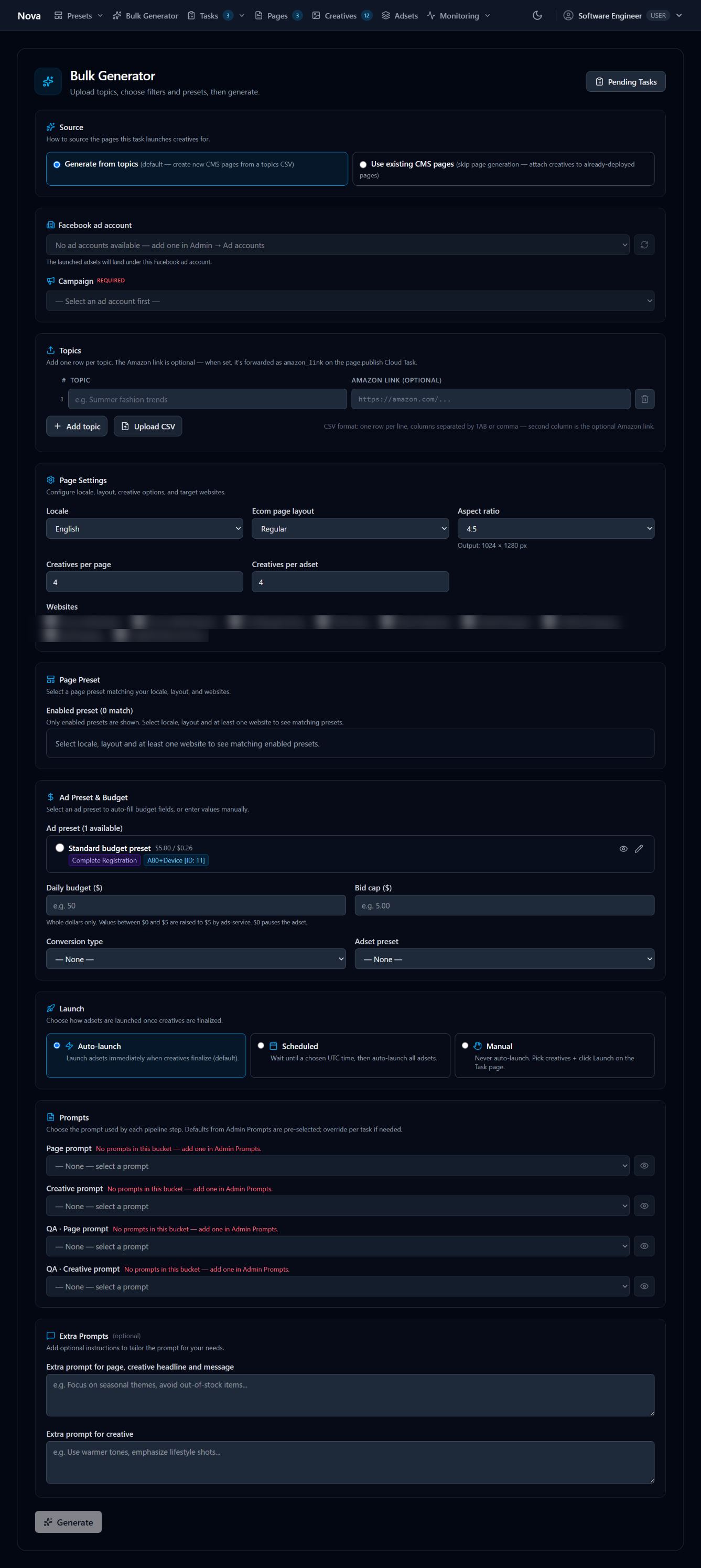
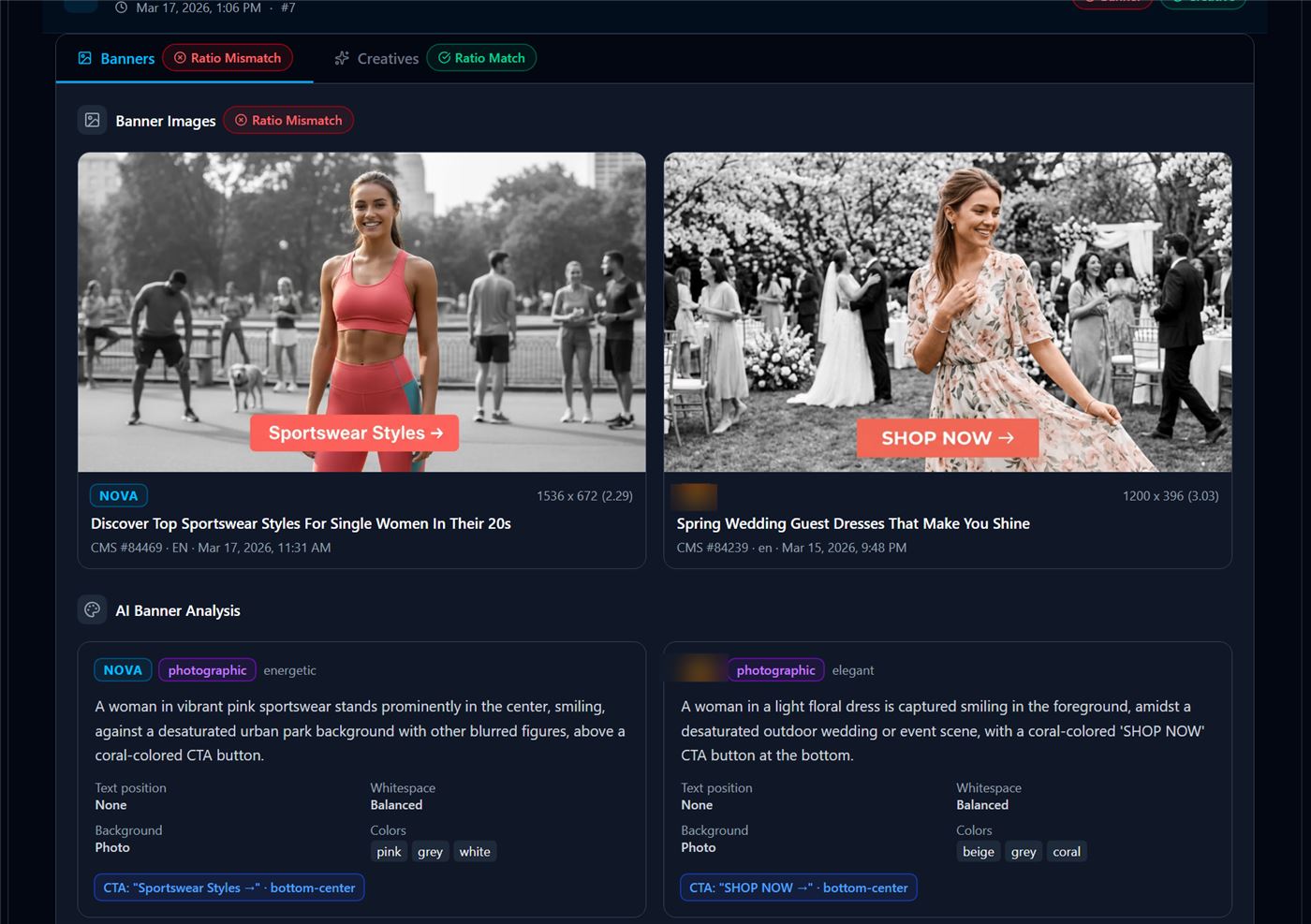
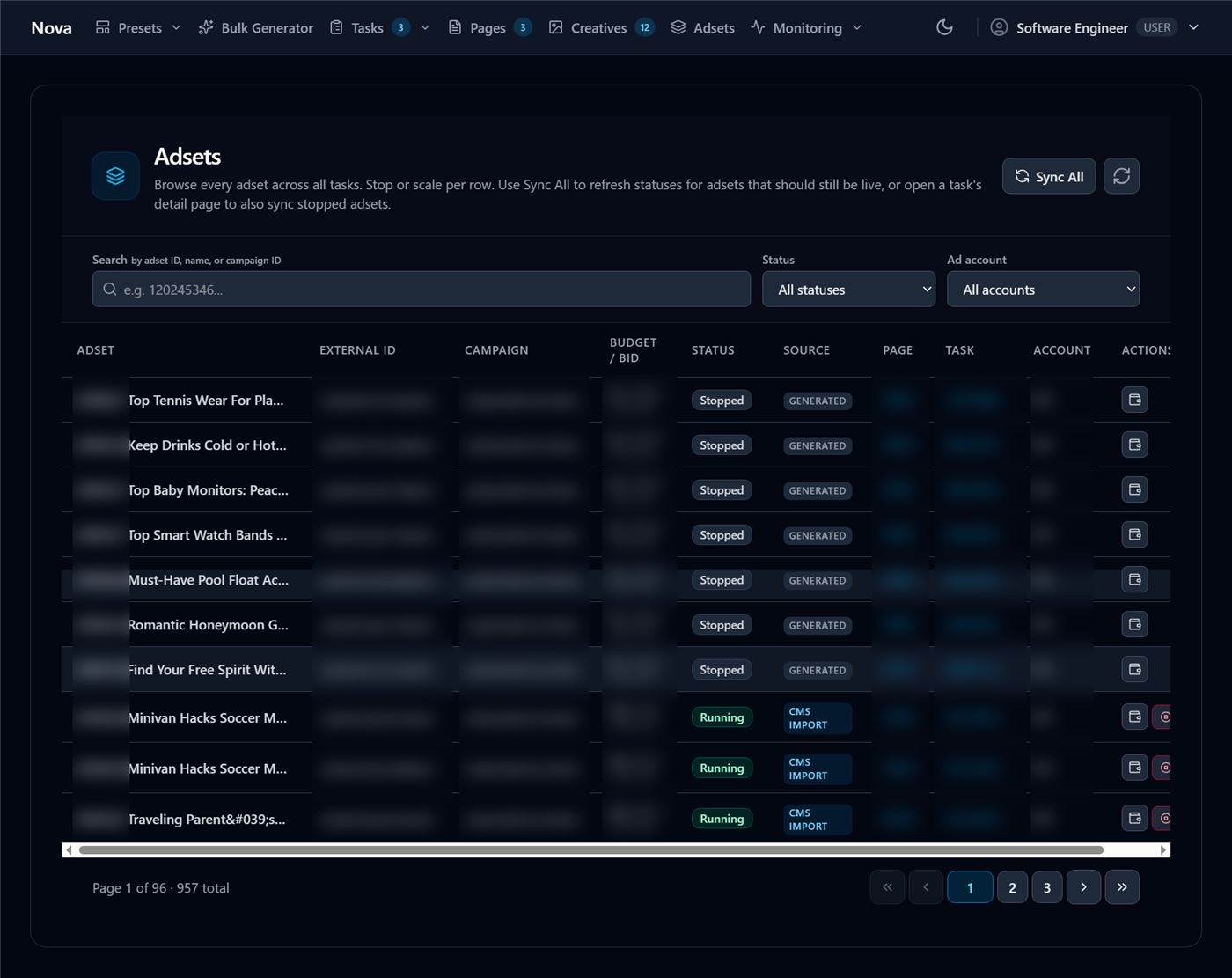
An event-driven AI platform on Google Cloud that turns a list of product topics into finished, live ad campaigns — landing pages, Gemini-written copy and Gemini-generated visuals, an automated QA gate that blocks bad creatives before any ad spend, and launch to Meta with budget and bid control. Seven specialized services coordinated by a TypeScript orchestrator I built (~29k LOC): Cloud Tasks command queues out, Pub/Sub events back, with exactly-once processing (message-ID dedup) and a monotonic status state machine so duplicate or out-of-order events can't corrupt pipeline state. I architected the platform from scratch and personally built its core — the orchestrator and the React 19 operator console (~61k LOC authored solo, first commit to production in six months) — while a small team built the Python content service to the integration contract I defined; together we took a 2025 n8n prototype to this production system.
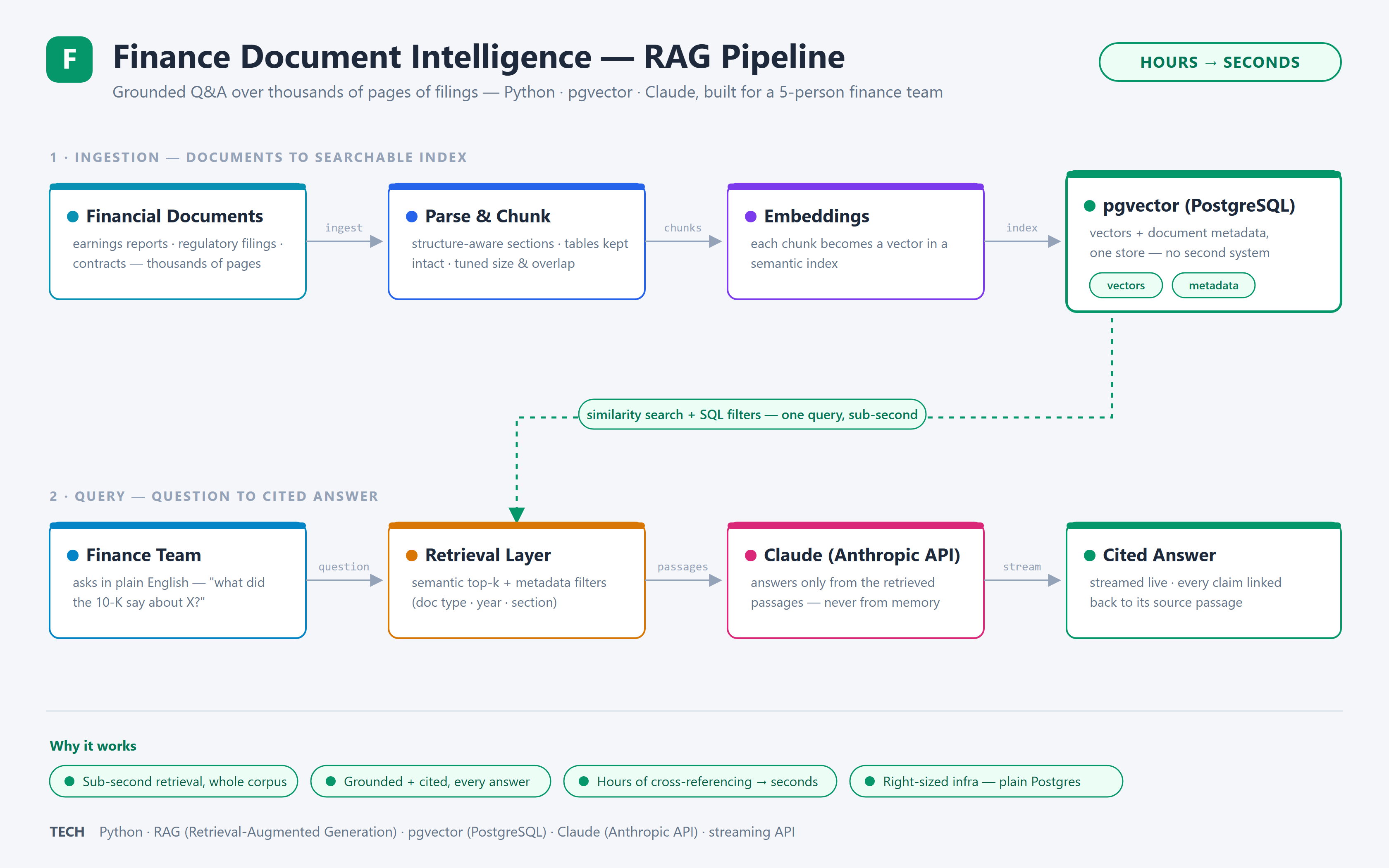
Finance Document Intelligence — RAG Pipeline
End-to-end RAG system for a finance client: thousands of pages of earnings reports, regulatory filings, and contracts, chunked structure-aware and embedded into pgvector — vectors and document metadata in one Postgres store, so similarity search and SQL filters run as a single sub-second query. A 5-person finance team asks questions in plain English and gets streamed answers grounded in retrieved passages, with every claim cited back to its source.
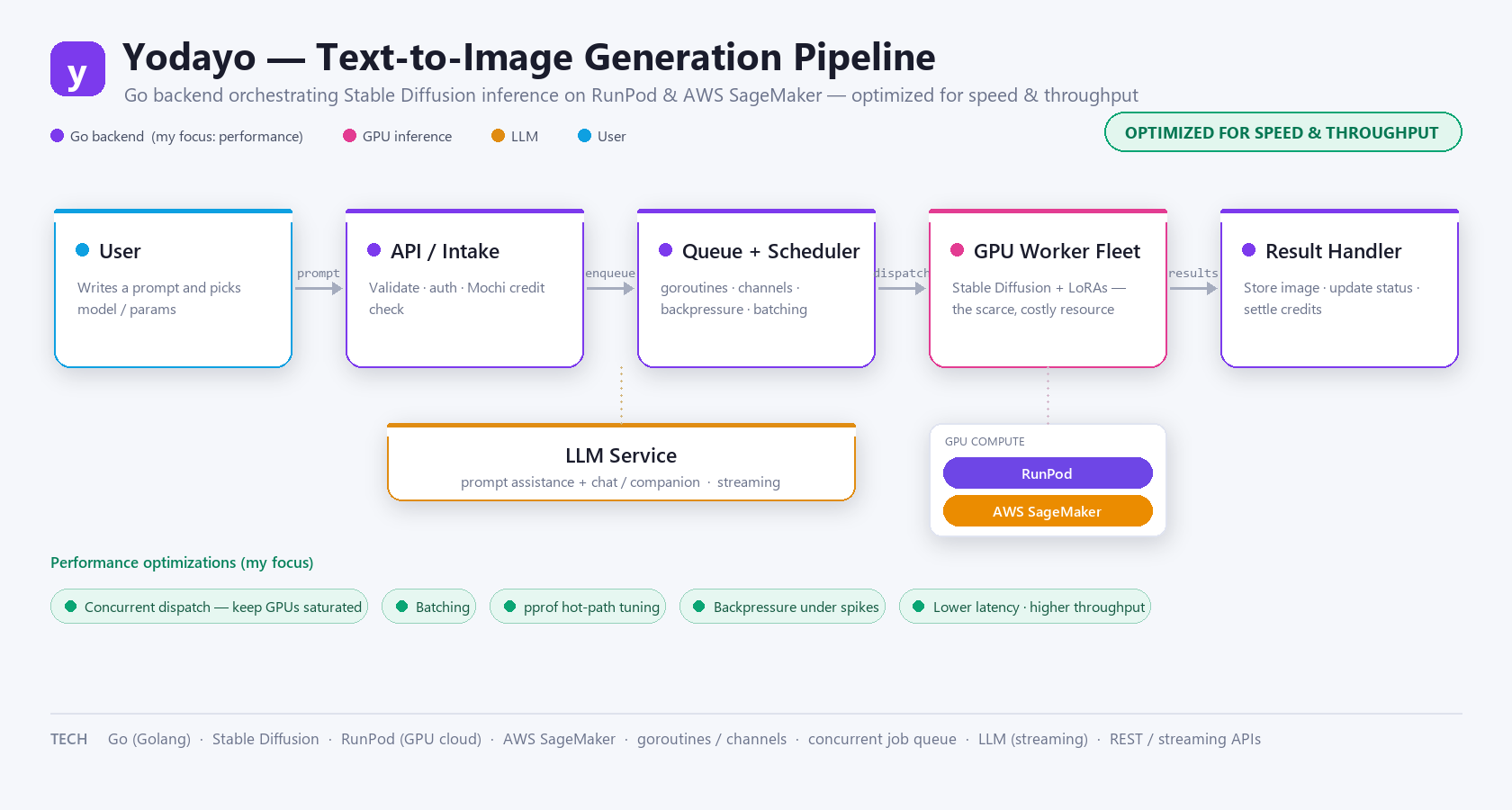
Yodayo — Stable Diffusion Serving Optimization
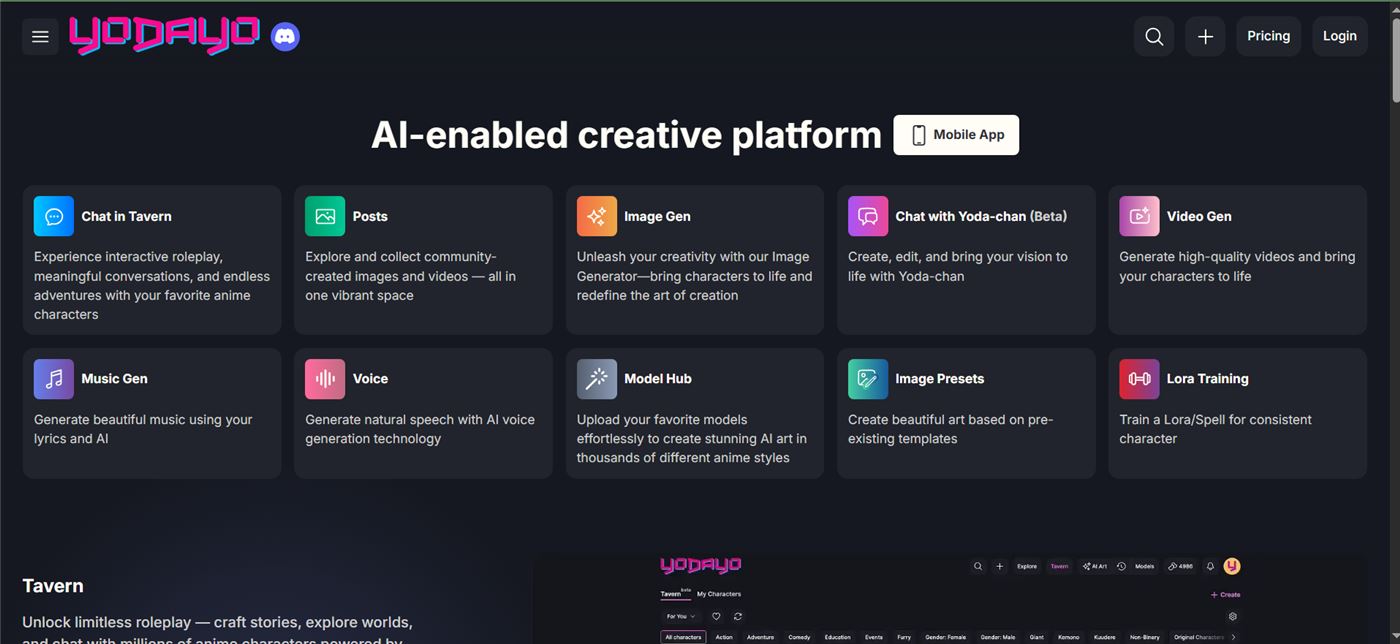
Go backend work on the text-to-image generation path of a major AI anime-art platform. Dynamic request batching (one GPU pass → multiple images), concurrent dispatch and worker pooling to keep RunPod / AWS SageMaker GPU workers saturated, warm model pools to kill cold starts, and pprof-driven hot-path tuning — more images per GPU-hour at lower per-image cost. Also integrated GLM-4, DeepSeek V3, and Claude for streaming chat across 105,000+ community models. The same backend powers the Moescape AI platform.
Open Source
Selected repos from github.com/adam-eques
Multi-agent research pipeline with RAG, hybrid BM25 + semantic search, FastAPI streaming — a supervisor agent routing between specialist nodes.
GomcpcZero-dependency Model Context Protocol (MCP) client for Go — library + CLI, over stdio or HTTP.
Pythonfinsight-crewMulti-agent AI crew (CrewAI) that researches a stock and writes a cited investment brief.
PythonextractflowSchema-validated structured extraction from documents — PDF, DOCX, CSV, email — using LLMs.
GoflowraSelf-hostable, AI-native workflow automation engine in Go — define LLM-powered pipelines as a single YAML file.
GomcpkitPure-Go MCP client with a concurrent read loop — library + CLI.
Core Skills
What I reach for, grouped the way I actually use it.
Experience
Seven years of backend engineering, now aimed at production AI.
AI Engineer · Self-Employed
Architected Nova from scratch and built its core (20–30k ads/day AI ad-automation platform), delivered the Finance Document Intelligence RAG pipeline, optimized Stable Diffusion inference on Yodayo's Go backend, and shipped n8n / Make.com / Zapier LLM automations for multiple clients.
Backend Engineer · Infiniteproxies
Redesigned the billing PostgreSQL schema and query paths across Go, Python, and TypeScript backend services (p95 reads ~410ms → ~290ms), added Redis LRU caching (−⅓ DB round-trips), and cut CI image builds from ~9 to ~4.5 minutes.
Backend Developer (Contract) · FedEx
Built Go, Python, and TypeScript microservices for a real-time shipment-tracking system (~12K MAU) with WebSocket APIs, modelling shipment history and tracking events in MongoDB; alerting with <1% missed/duplicate notifications; migrated builds to Jenkins (deploy prep ~40 → <10 min).
Backend Developer · Feather
Scalable Go and Python microservices on Kubernetes/Docker with PostgreSQL and MongoDB for a user base past ~100K; Redis caching roughly halved p95 under peak; end-to-end mTLS between services.